

How Does K‑Laser Nail Surgery Compare to Phenol, and Which Heals Faster?
How Does K‑Laser Nail Surgery Compare to Phenol, and Which Heals Faster?
K‑Laser nail surgery and phenol nail surgery both aim to stop part (or all) of a nail from growing back after it’s removed under local anaesthetic. The big difference is how the nail matrix is treated: phenol uses a chemical, while K‑Laser uses laser energy. In our experience, K‑Laser typically means less post‑op pain and faster healing.
What causes an ingrown toenail (and why might surgery be needed)?
Most ingrown toenails happen when the nail edge presses into the surrounding skin and triggers pain, swelling, and sometimes infection. If the problem keeps coming back, nail surgery may be recommended to remove the painful section and prevent regrowth.
(Read more about ingrown toenails on the NHS website.)
Common causes include:
Nail shape (naturally curved or “involuted” nails)
Cutting nails too short or down the sides
Tight footwear that compresses the toes
Repeated pressure (sport, dance, long periods on your feet)
Previous nail trauma
Swelling around the nail (which makes the nail edge dig in)
How does nail surgery help with an ingrown toenail?
Nail surgery removes the painful part of the nail (or sometimes the whole nail) under local anaesthetic, then treats the nail matrix so the problem section doesn’t grow back.
At Kenilworth Footcare, we offer two ways to treat the nail matrix:
Phenol (traditional method): a chemical is applied to the matrix to prevent regrowth.
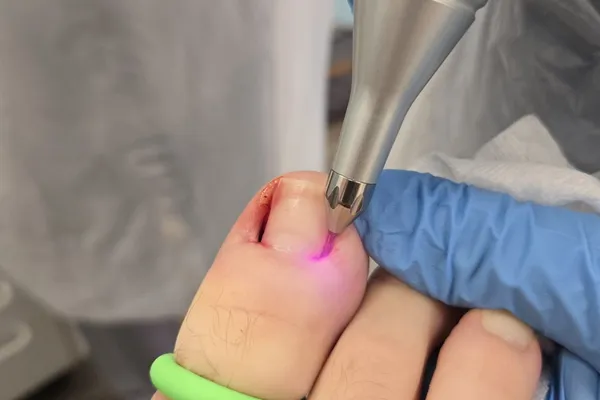
K‑Laser (advanced method): the laser is used to “surgically” treat the matrix without using phenol.
What to expect on the day:
Local anaesthetic is used to fully numb the toe.
The problematic nail section is removed.
The matrix is treated (phenol or K‑Laser, depending on your plan).
The toe is dressed and aftercare is explained.
How long does treatment take to heal?
Healing time varies, but the biggest difference most people notice is how quickly the toe settles after the procedure.
Healing Time: Phenol vs K-Laser
Phenol: typically 6–8 weeks to heal.
K‑Laser: average healing time around 2 weeks.
Pain after the procedure:
K‑Laser: commonly 0–2/10.
Phenol: often around 6/10.
Because phenol is a chemical, there can also be a risk of phenol flares and chemical irritation to healthy tissue. With K‑Laser, there’s no phenol, which reduces those specific risks.
What can I do at home after nail surgery?
Good aftercare supports healing and helps reduce discomfort.
Aftercare Checklist (we’ll tailor these to you):
Follow your dressing instructions exactly (timing and technique matter).
Keep the area clean and dry between dressing changes.
Wear roomy footwear to avoid pressure on the toe.
Avoid high‑impact activity until we confirm healing is on track.
Watch for warning signs such as increasing redness, heat, swelling, worsening pain, or discharge that’s getting heavier rather than improving.
Safety note:
If you have diabetes, poor circulation, immune conditions, or you’re prone to infection, your aftercare plan may need extra monitoring - tell us before your procedure.
FAQ
Does K‑Laser nail surgery hurt?
The procedure itself is done under local anaesthetic, so you shouldn’t feel pain during treatment. Afterwards, most people report low pain levels with K‑Laser—often around 0–2/10. Your experience can vary depending on inflammation or infection beforehand, but we’ll guide you on pain relief and aftercare.
Is phenol nail surgery still effective?
Yes—phenol has been used for decades and is effective at preventing regrowth. However, because it’s a chemical, it can irritate healthy tissue and occasionally cause a “phenol flare,” which may increase discomfort and slow healing. That’s why many clinics now offer alternatives like laser.
Why is healing faster with K‑Laser?
In our experience, K‑Laser tends to cause less irritation to surrounding healthy tissue compared to phenol. Less tissue irritation generally means less discharge and a quicker return to normal activity. Healing still depends on your health, footwear, and how closely aftercare is followed.
Which option is best if I need to get back to sport or dance quickly?
If your priority is a quicker healing timeline and lower post‑op pain, K‑Laser is often the preferred option. One of our patients who experienced both methods strongly preferred K‑Laser—especially because the recovery felt less stressful and faster. We’ll still assess your toe and goals before recommending the best approach.
Book a nail surgery consultation at our Kenilworth clinic
If you’re considering nail surgery and want to talk through K‑Laser vs phenol (including pros, cons, healing time, and what’s right for your toe), book a consultation with us.
Contact Kenilworth Footcare:
📞 01926 563555
📍 2 Oaks Precinct, Kenilworth CV8 1DP
With free parking and ground-floor access. We're here to help you get back to the activities you love, comfortably and confidently.