


Identifying Toenail Fungus: Signs and Solutions
How Do I Know if My Toenail Is Actually Fungal?
If your toenail looks yellow, thick, or a bit crumbly after months under polish, it might be a fungal nail - but it also might be damage, pressure, or an old bruise growing out. The quickest way to know is to look at the pattern of change and, if needed, do a simple nail test before starting treatment.
What causes fungal toenails?
A fungal nail infection happens when fungal spores settle under the nail plate and start to grow.
It’s more likely when nails are warm, damp, or under pressure — which is why it often shows up after summer holidays, sweaty trainers, or long periods of nail polish.
Common risk factors include:
Athlete’s foot (fungus on the skin can spread to the nail)
Nail salons, communal showers, pools, and gym changing rooms
A nail that’s been damaged (fungus gets in more easily)
Slower nail growth as we get older
Diabetes or reduced circulation
Read more about fungal infections HERE
What does a fungal toenail typically look like?
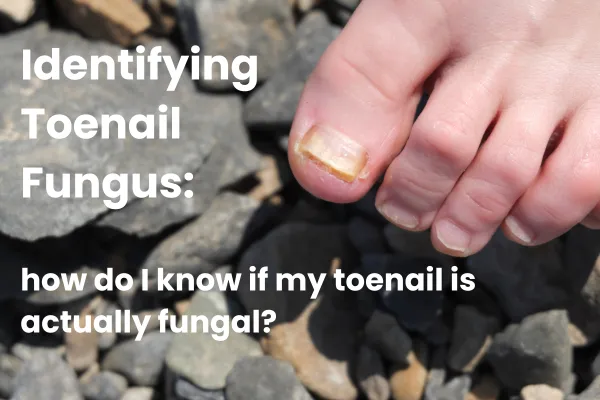
Fungal nails often change slowly and look yellow/white, thicker, and more brittle over time.
Typical signs include:
Yellow, white, or brown discolouration
Thickening (the nail can feel harder to cut)
Crumbly edges or debris under the nail
The nail lifting away from the nail bed
A dull, rough surface (rather than smooth and shiny)
A mild smell or “musty” odour in some cases
One important detail: fungal nails usually don’t appear overnight. They tend to creep in gradually.
How does a fungal nail differ from trauma or damage?
Trauma usually has a clear trigger and often grows out; fungus tends to spread and worsen.
Nail trauma can come from:
Tight shoes (especially in summer sandals or trainers)
Long walks/runs, hiking holidays, or sport
A stubbed toe
Repeated pressure on one nail (often the big toe)
Trauma-related changes often look like:
A dark red/purple/black bruise under the nail
A white patch where the nail has lifted slightly
A nail that becomes thick after repeated knocks
A nail that splits or develops ridges
Key difference: trauma often improves as the nail grows out, whereas fungus tends to spread across the nail or affect other nails.
Why a thick or yellow nail isn’t necessarily fungal
Thick or yellow nails can be caused by pressure, ageing, polish staining, psoriasis, or old injury - not just fungus.
A few common “lookalikes” we see a lot:
Polish staining: yellowing after dark polish, especially without a base coat
Pressure thickening: nails respond to repeated pressure by becoming thicker
Old bruising: discolouration that shifts forward as the nail grows
Skin conditions (like psoriasis/eczema): can change nail texture and colour
That’s why it’s risky to assume “yellow = fungal” and start months of treatment without checking.
What happens if you leave it untreated?
Some fungal nails stay mild, but many slowly worsen and can spread to other nails or the skin.
If left alone, you may notice:
The nail thickens further and becomes harder to manage
The nail lifts, catches, or breaks more easily
Discomfort in shoes due to pressure
Spread to other toenails
Athlete’s foot flares (itchy, peeling skin)
If you have diabetes, poor circulation, or reduced sensation, it’s especially important to get nail changes checked early.
Do you need to have it tested?
Testing is often the best next step if you’re unsure - especially before oral medication or if treatment hasn’t worked.
A nail test can confirm whether fungus is present and can help avoid:
Wasting time and money on the wrong treatment
Months of applying products with no improvement
Missing another cause of nail change
In clinic, testing is usually quick and straightforward - we take a small sample from the nail and then give you results within 5 minutes.
If you’re in Kenilworth, Warwick, Leamington Spa, or Coventry, we can assess and test your nail in clinic. You can book a Fungal Nail Assessment HERE
What treatments are available?
Treatment depends on how much of the nail is involved and whether fungus is confirmed.
Options may include:
Professional nail reduction/debridement: thinning the nail so treatments can penetrate better
Prescription topical treatments: stronger than many over-the-counter options
Dissolving the infected parts of the nail using a softening cream
Perforating the surface of the nail with a fine burr to allow topical treatments to penetrate.
Oral antifungal medication: sometimes appropriate, but usually after testing and medical review
Laser treatment: can be helpful for some people, often as part of a plan rather than a one-off
A realistic note: toenails grow slowly, so even with the right treatment, visible improvement can take months.
Why over-the-counter treatments don’t always work
Short answer: Many OTC products can’t penetrate a thick nail well, and some nails aren’t fungal in the first place.
Common reasons people don’t see results:
The nail is too thick for the product to reach the infection
The treatment isn’t used consistently for long enough
Reinfection from shoes/socks or untreated athlete’s foot
The nail change is due to trauma or another condition
When is it worth seeing a podiatrist?
If you’re not sure what you’re dealing with, it’s spreading, it’s painful, or you’ve tried OTC treatments with no change.
It’s worth booking in if:
Only one nail is affected and you can’t work out why
Several nails are changing
The nail is lifting, crumbling, or catching in shoes
You’ve used OTC treatments for 8–12 weeks with no improvement
You have diabetes, poor circulation, or immune issues
A podiatrist can assess the nail, recommend testing if needed, and build a plan that’s realistic for your lifestyle. We offer a specific Fungal Nail Assessment appointment for this purpose.
What can I do at home?
Keep nails short and dry, avoid nail polish while treating, treat any athlete’s foot, and reduce reinfection from footwear.
Homecare checklist:
Keep nails trimmed straight across (don’t dig down the sides)
Dry feet well after bathing, especially between toes
Change socks daily (more often if you sweat)
Rotate shoes and let them dry fully between wears
Use antifungal spray/powder in shoes if athlete’s foot is an issue
Avoid covering a suspicious nail with polish until you know what’s going on
Safety note: If you have diabetes or reduced sensation, avoid self-filing thick nails aggressively - it’s safer to have them reduced professionally.
FAQ
Can nail polish cause a fungal nail?
Nail polish doesn’t cause fungus, but it can trap moisture and hide early changes. If a nail is already damaged or there’s athlete’s foot present, fungus can take advantage. If you notice discolouration after removing polish, it’s worth checking whether it’s staining, trauma, or a fungal infection.
How long does it take to clear a fungal toenail?
Toenails grow slowly, so even with the right plan it often takes months to see a clear nail grow through. Many treatments need consistent use, and results depend on how much of the nail is affected, your overall health, and whether reinfection is prevented through footwear and skin care.
Why does it keep coming back?
Fungal nail can return if fungal spores remains in shoes, socks, nail tools, or on the skin (athlete’s foot). Even after improvement, reinfection is common without prevention steps. A podiatrist can help you reduce the nail thickness, confirm the diagnosis, and create a plan to lower the chance of recurrence.
Should I start treatment before testing?
If you’re confident it’s fungal and it’s mild, you might try a consistent plan - but if you’re unsure, it’s spreading, or you’re considering oral medication, testing is usually the smartest step. It prevents wasted time and helps you choose the right treatment.
Next step
If you’ve taken off summer polish and you’re not sure whether the nail is fungal or just damaged, book a nail assessment. We can check what’s going on, advise whether testing is needed, and talk you through the best treatment options.
Book your assessment HERE
Further Reading:
Five Minute Fungus - Dermatophyte testing
Contact Kenilworth Footcare:
📞 01926 563555
📍 2 Oaks Precinct, Kenilworth CV8 1DP
With free parking and ground-floor access. We're here to help you get back to the activities you love, comfortably and confidently.